

Created: 5th August, 2026

Tom joined Barker in 2020. He is a Partner based in our London office. Tom has over 15 years of experience in the built environment offering strategic and technical advice to a wide variety of clients across the UK.
Highly experienced in strategic estates advisory services, project management, estates planning, decarbonisation, net carbon zero strategy and funding solutions.
Tom’s key focus is to support Barker’s clients as they transform their estates and decarbonise. He works across the education and public sectors and advises a number of sector bodies on estates management and energy reduction best practice.
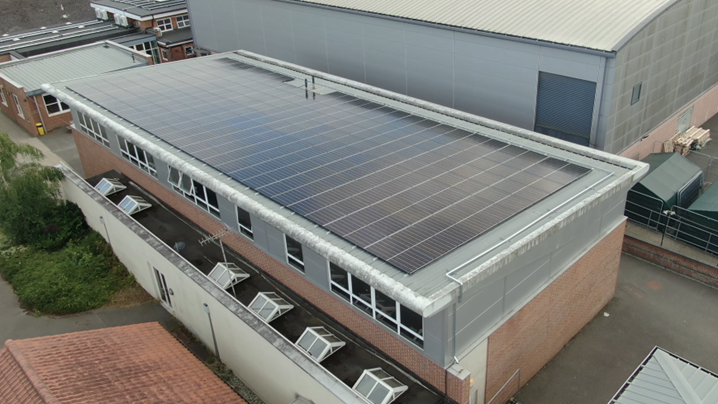
As organisations across the public sector looks to reduce energy costs and carbon emissions, solar photovoltaic (PV) installations are becoming an increasingly attractive option. However, not every organisation has access to the capital required to fund a solar installation outright.
A Power Purchase Agreement (PPA) is one option that can enable building owners to benefit from solar generation without significant upfront investment. With increased interest in the sector, and anticipated developments in government policy, procurement frameworks and market regulation, it is important that those who own and manage buildings understand the opportunities, risks and due diligence requirements before entering into any long-term agreement.
At Barker, we have supported public sector organisations across the UK with net zero strategy, energy and infrastructure investment planning, and solar deployment programmes. Our experience includes work with the DfEs Net Zero Accelerator programme, Great British Energy Solar Partnership programme, Greater Manchester Combined Authorities “Powering Our Schools” Programme, the Public Sector Decarbonisation Scheme, and schools, trusts and responsible bodies nationwide.
A PPA is a long-term contract between an organisation that generates electricity and an organisation that purchases it.
In a typical solar PPA:
PPAs are often considered where organisations want to reduce carbon emissions and energy costs but do not wish to fund the installation directly.
Before considering a PPA, organisations should assess alternative delivery models, including:
A PPA should therefore form part of a wider options appraisal rather than being considered in isolation.
Potential benefits include:
For some organisations, PPAs can provide a route to solar deployment where capital funding is unavailable or prioritised elsewhere.
PPAs are long-term contractual arrangements and should be assessed carefully.
Potential considerations include:
The suitability of a PPA will vary depending on an organisation’s financial position, estate strategy and risk appetite.
PPAs can be an established route to delivering solar installations within the education sector, but they require careful consideration of governance, procurement, financial and legal requirements.
Responsible bodies should ensure that any proposed arrangement:
Requirements may differ depending on the organisation’s status, funding arrangements and contractual structure.
Some PPA providers operate through special legal entities such as Community Interest Companies (CICs) or community energy co-operatives.
These organisations are typically established to deliver community benefit alongside renewable energy generation.
While some schemes have successfully delivered local investment, educational benefits and community funding, organisations should distinguish between:
The most reliable and measurable benefit is usually the direct energy cost saving delivered through the PPA itself.
Any future profit-sharing, community dividends or surplus distributions should be assessed carefully and supported by evidence of previous delivery case studies.
A useful starting point is:
Strategic Questions
Financial Questions
Technical Questions
Commercial Questions
Governance Questions
Before entering into any PPA, organisations should consider:
Independent specialist advice should be obtained before entering into any binding agreement.
The public sector is seeing growing interest in community energy models and innovative financing arrangements including solar PPAs.
Government announcements relating to Great British Energy, future framework arrangements and wider market regulation are expected to further shape this space.
As these developments emerge, building owners should ensure that decisions are based on robust evidence, independent advice and a clear understanding of long-term obligations.
Barker has extensive experience supporting schools, academy trusts, local authorities and public sector organisations with estate strategy, funding, procurement and decarbonisation programmes.
Whether you are considering a PPA, direct ownership, grant funding or a wider net zero strategy, our team can provide independent advice, options appraisal, business case development and project delivery support to help you make informed investment decisions.
If your organisation is exploring solar energy opportunities, contact Barker to discuss the most appropriate route for your estate, financial position and long-term objectives.
This article is intended as general guidance only and should not be relied upon as legal, financial, accounting or technical advice. Organisations should obtain specialist professional advice before entering into any contractual arrangement.