

Created: 8th June, 2026

Robert joined Barker in 2002 and is a Partner based in our Braintree office. A Fellow of the Royal Institution of Chartered Surveyors, he has over 20 years’ experience of all core building surveying services and provides strategic estates advice to key accounts in the education, commercial, ecclesiastical and public sectors.
An education specialist, he provides the following services: estates and energy strategy, asset management planning, project management and capital funding applications.
Robert works closely with clients to plan and implement energy efficiency and sustainability strategies to save money, reduce carbon emissions and meet ESG objectives.
As a RICS Certified Historic Buildings Professional he provides conservation consultancy for clients with listed and historic buildings.
Robert is an experienced APC Assessor and Chairman and is also an external examiner for Anglia Ruskin University
As a Partner Robert leads the Business Development and Marketing function at Barker, builds relationships with key sector bodies and helps steer the strategic growth of the company.
Email: rgould@barker-associates.co.uk
Tel: 01279 648057
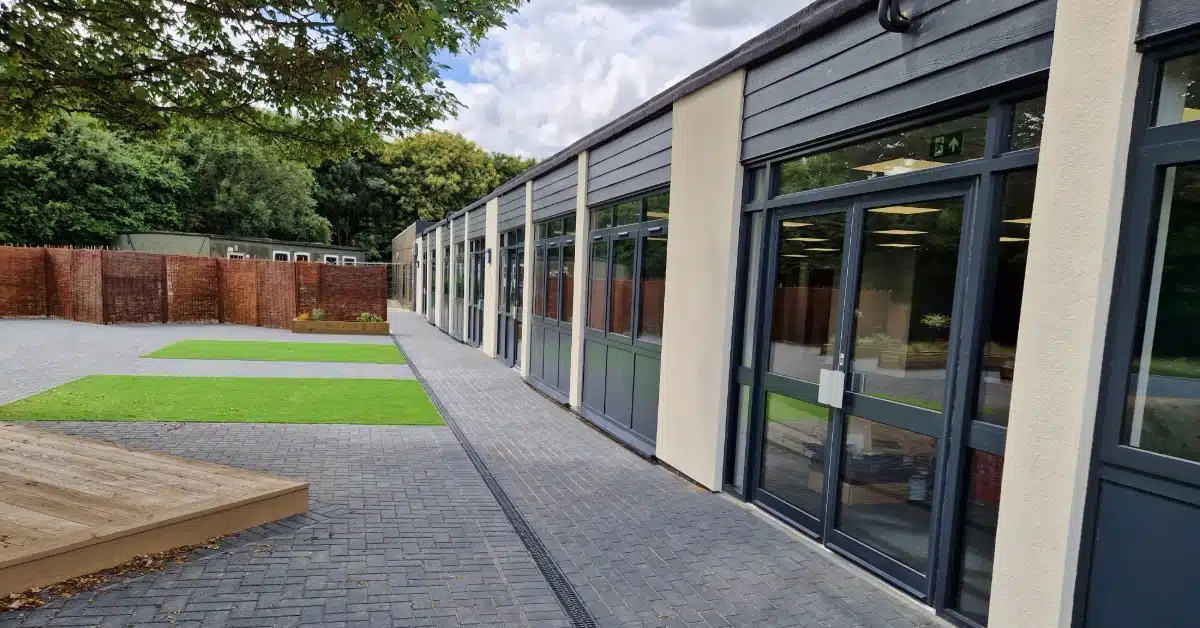
School leaders are under constant pressure to do more with less.
When it comes to estate strategy, the conversation often gravitates toward the excitement of new builds, the clean slate, the architectural statement, the promise of transformation. But this focus can obscure a crucial truth: the biggest opportunity for impact often lies in the “missing middle”, the space between minor maintenance and full rebuilds.
According to government figures, 80% of the buildings that will be in use in 2050 already exist. Therefore, retrofitting and renewal projects are not consolation prizes for schools that can’t secure capital for new buildings. They are strategic, necessary interventions that unlock value across an ageing education estate.
And now that the Department for Education (DfE) has launched its Renewal and Retrofit Programme (RRP) as part of its new Education Estates Strategy, the case for prioritising this middle ground has never been stronger.
School estates rarely fail overnight. Buildings age gradually, systems become inefficient, and small issues compound into major risks. Yet traditional funding routes tend to polarise solutions into two extremes:
Retrofitting sits between these poles. It allows schools to:
There’s a misconception that retrofit projects are simply about fixing what’s broken. In truth, deep retrofitting involves re‑imagining what already exists:
These interventions don’t just repair buildings. They had better satisfy compliance requirements and bring them fully in line with contemporary standards.
The DfE’s Renewal and Retrofit Programme is a new capital initiative aimed at improving the condition and sustainability of school and college buildings across England. Backed by £710 million, it focuses on extending the life of existing estates; targeting buildings that are too deteriorated for routine maintenance funding but not yet in need of full rebuild.
Importantly, this is not currently a bidding fund. Schools and responsible bodies cannot apply; instead, projects are identified and selected directly by the DfE using condition data and suitability criteria. Eligible organisations are contacted by the department, and early engagement does not guarantee selection.
The programme is currently being piloted (2026–27) in selected regions, focusing initially on priorities such as replacing life‑expired temporary buildings and improving energy efficiency.
While limited in scope at this stage, the programme signals a shift towards a more strategic, data‑led approach to capital funding. It sits alongside the government’s wider estates strategy and is expected to inform the future replacement of the Condition Improvement Fund (CIF) by autumn 2028, moving away from competitive bids towards centrally prioritised investment.
For the sector, this represents an early indication of how capital allocations may operate in future – less bid‑based and more driven by DfE‑held data and national priorities.
Retrofitting is also one of the most powerful tools schools have to meet their environmental commitments, because, when implemented correctly, it:
In many cases, retrofitting delivers a better carbon‑to‑cost ratio than new builds, making it the more responsible choice for both budgets and the planet.
Very often, the most sustainable building is the one that already exists.
The benefits extend far beyond sustainability. Retrofitting can dramatically improve the well-being and comfort of everyone who uses the building.
These are not abstract gains. They translate directly into better attendance, improved behaviour, and stronger educational outcomes.
By addressing issues such as damp, overheating, poor ventilation, and inconsistent temperatures, retrofit projects help create environments where pupils and staff can thrive. This is especially important in older buildings where environmental conditions can vary dramatically from room to room.
A well‑planned retrofit programme can deliver a plethora of financial benefits, including:
Schools often discover that targeted renewal projects generate compounding savings, freeing up revenue for teaching and learning.
A strong estates strategy doesn’t default to new builds. It evaluates the full lifecycle of every asset. Retrofitting becomes a powerful lever when leadership teams:
This is where the “missing middle” becomes a strategic advantage rather than an afterthought.
New builds will always have their place. But for many schools, the most impactful, cost‑effective, and sustainable improvements come from renewing what already exists.
If you are exploring how to make the most of your education estate, the question isn’t “new build or nothing”. It’s how to unlock the full potential of the middle ground.
Barker sits at the intersection of strategic estates planning, technical expertise, and deep sector understanding, which means we are unusually well placed to support schools with renewal and retrofit projects.
Drawing upon our deep technical capabilities, we work with multi‑academy trusts, maintained schools, and independent schools across the UK to unlock capital; assess both risk and educational impact to ensure funds are directed into priority areas; and ensure all projects are aligned with Net Zero goals.
If you have a school retrofit project in mind, speak to our education specialists to discuss your requirements and find out how we can support you.