

Created: 20th May, 2026

Robert joined Barker in 2002 and is a Partner based in our Braintree office. A Fellow of the Royal Institution of Chartered Surveyors, he has over 20 years’ experience of all core building surveying services and provides strategic estates advice to key accounts in the education, commercial, ecclesiastical and public sectors.
An education specialist, he provides the following services: estates and energy strategy, asset management planning, project management and capital funding applications.
Robert works closely with clients to plan and implement energy efficiency and sustainability strategies to save money, reduce carbon emissions and meet ESG objectives.
As a RICS Certified Historic Buildings Professional he provides conservation consultancy for clients with listed and historic buildings.
Robert is an experienced APC Assessor and Chairman and is also an external examiner for Anglia Ruskin University
As a Partner Robert leads the Business Development and Marketing function at Barker, builds relationships with key sector bodies and helps steer the strategic growth of the company.
Email: rgould@barker-associates.co.uk
Tel: 01279 648057
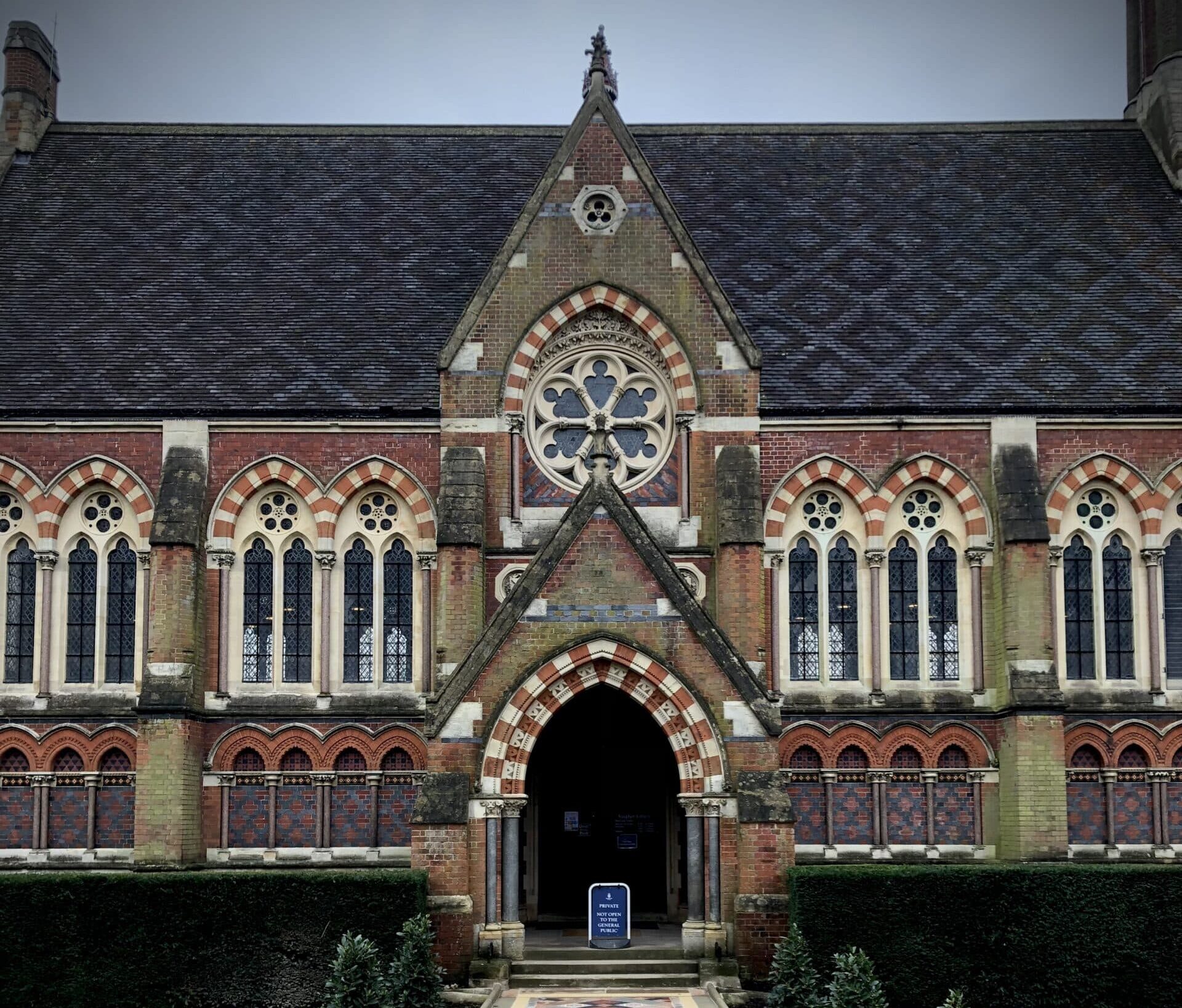
Heritage school buildings are among the most distinctive and culturally significant educational environments in the UK.
They inspire pride, anchor communities, and offer architectural value that modern buildings often cannot replicate.
Yet for facilities managers, estate managers, bursars and everyone else involved in the smooth-running of school sites, they also present a complex estate management challenge: how to preserve their historic character while ensuring they remain safe, compliant, efficient and fit for 21st-century education.
Barker brings decades of experience in the conservation, restoration and development of historic buildings. With their advanced qualifications in building conservation, our specialist heritage team works with schools, diocesan bodies and public organisations to deliver sensitive, compliant and future‑proof improvements to heritage estates.
This division is headed up by Juan Martinez, our registered RIBA Associate Conservation Architect, who has extensive experience working on complex projects through all RIBA stages.
With pertinent insights from Juan, let’s explore the unique challenges facing school leaders and outline the key considerations that help reduce risk, avoid unnecessary costs and protect the long‑term value of heritage school buildings.
By their nature, heritage buildings were constructed in eras with very different expectations for safety, accessibility, and educational delivery.
For many schools, refurbishing heritage buildings also presents an opportunity to improve energy performance, reduce carbon emissions and align refurbishment works with wider objectives around meeting school sustainability goals, without compromising architectural significance
This means school leaders must navigate:
Barker’s heritage team understands these complexities deeply. Our approach is always bespoke, balancing the need for modern functionality with the responsibility to preserve historic significance. We work proactively with planning authorities to secure the best possible outcomes for our clients and, of course, the building itself.
Heritage school buildings may be:
This means that even minor alterations may require Listed Building Consent (LBC), planning permission, or building regulations approval
You need to be aware of relevant legislation, including:
Barker’s conservation specialists regularly prepare and submit applications for works to historic buildings, ensuring compliance and reducing the risk of delays or enforcement action.
Heritage buildings often conceal issues such as:
Standard condition surveys are rarely sufficient. Barker’s heritage team provides:
Our experience with historic buildings ensures that risks are identified early and costly surprises are prevented further down the line.
See how we supported Alleyn’s School, a co-educational independent day school and sixth form in Dulwich, through a comprehensive assessment of its building condition.
Older buildings often fall short of contemporary fire safety requirements. Challenges include poor compartmentation, inadequate escape routes, timber floors, voids that accelerate fire spread, and restrictions on altering historic fabric.
To combat these issues, schools must comply with:
Sensitive integration of alarms, emergency lighting and fire doors is essential to maintain heritage character while keeping all building users safe and protected.
The most sustainable building is the one that is already there. In this respect, older premises might be less energy efficient, but through well-considered refurbishment and retrofit strategies, they can sometimes create less embedded carbon than newer builds.
Regardless, however, schools face increasing pressure to reduce carbon emissions and running costs. So, how can business leaders meet their Net Zero targets without compromising the character and integrity of their building?
Key options include:
The DfE Good Estate Management for Schools (GEMS) framework also needs to be considered when planning energy upgrades.
Juan expands on this further in terms of the process that needs to be followed for new heating installations.
“The first step when preparing a historic building for low-carbon heating is to assess the building to understand not only its historic significance, but where and to what extent heat is being lost, how the site is ventilated, and how moisture moves around the space. From here, it’s important to reduce heat demand carefully through draughtproofing, loft insulation, secondary glazing and heating controls.”
Juan notes that the key things to remember are:
Built in entirely different eras, heritage buildings often lack step‑free access, accessible toilets, adequate signage, or suitable circulation routes.
Schools must make reasonable adjustments while respecting any protected features. Creative design solutions, such as sensitively designed ramps or discreet platform lifts, can improve the accessibility of the building without detracting from its finest features.
Older buildings often come with hidden security gaps, from multiple uncontrolled access points, poor visibility lines, and outdated security systems.
Improving safety means introducing sensible upgrades on the safety front, like access control systems, CCTV, secure line strategies, and boundary improvements.
These must be integrated sensitively to avoid visual or structural harm to heritage features.
Heritage buildings often struggle to support modern teaching, with cellular layouts, limited flexibility, poor acoustics, and inadequate ventilation.
As we know, modern teaching requires adaptable, digitally enabled spaces that can scale as technology evolves. Solutions may include reconfiguring internal layouts (subject to consent), introducing breakout spaces, upgrading ICT infrastructure, and improving natural and mechanical ventilation.
Our architects specialise in designing interventions that enhance functionality while respecting historic significance.
Heritage projects can be more expensive due to the need for specialist materials, skilled conservation contractors (who are not always immediately available) and/or extended planning processes.
To counter escalating costs, school leaders should consider:
Barker’s expert funding team supports clients with grant applications and long‑term maintenance strategies, helping ensure that heritage assets are preserved for future generations.
Juan says that successful heritage funding applications usually depend on how effectively you can show that the project is:
Find out more about Barker’s work with heritage independent schools and view a series of case studies here.
Schools can expect to encounter a series of challenges, as Juan explains:
“Many heritage buildings remain occupied or operational during construction works, so careful phasing is essential to reduce disruption. This might require temporary closures, out-of-hours working, temporary entrances, and noise and dust control measures.
“Depending on the project’s location, teams will also need to navigate limited vehicle access, narrow streets, fragile structures, and sites that are of archaeological sensitivity. Unknown conditions might also uncover different issues with structural instability, timber decay, undocumented services, hazardous materials, or even buried archaeology.
“Obtaining licences, permissions and statutory consents can also be very time-consuming. Early engagement with local authorities, heritage bodies, utility providers or local communities helps to mitigate delays.”
Even with strong maintenance regimes, heritage school buildings remain vulnerable to unexpected events such as flooding, fire or storm damage.
These incidents are often more complex in historic environments because traditional materials, hidden voids and protected features can be easily damaged by standard repair methods.
Emergency repairs in heritage school buildings require a balance between urgency and conservation sensitivity.
The priority is to stabilise the building safely, making it watertight, securing the site and isolating utilities. Early involvement of conservation specialists is essential, as even temporary works may require sensitive handling or consultation with conservation officers.
Schools should also document the damage thoroughly for insurance purposes and ensure their reinstatement valuations reflect the true cost of repairing historic fabric.
Using appropriate materials and techniques, such as controlled drying after flooding or specialist cleaning of smoke‑damaged timbers, helps prevent long‑term deterioration.
Once the immediate risk is addressed, a full condition review can identify underlying vulnerabilities and opportunities to improve resilience, whether that’s through upgraded fire detection, improved drainage or modernised building services.
With the right expertise, emergency repairs can be carried out quickly, compliantly and in a sympathetic way.
See how Barker handled the emergency reinstatement works at Worth School with care, compassion and clear communication to develop a fully operational kitchen that is now a source of pride for staff and students.
You need to ensure capital investment aligns with curriculum needs, compliance requirements and funding cycles.
Barker’s conservation team can identify risks early and guide schools through complex regulatory processes.
Fire safety, structural integrity and accessibility should always come first.
Heritage buildings require ongoing stewardship; proactive planning prevents budget shocks.
Parents, governors, staff and local authorities all have a stake in heritage buildings and need to be consulted as a matter of course.
Heritage school buildings are irreplaceable assets. With the right expertise, they can be sensitively modernised to meet today’s educational, safety and sustainability standards, without losing the qualities that make them unique, balancing modern thinking with heritage protection.
Juan says:
“Through careful collaboration with stakeholders, Conservation Officers and specialist Contractors, we will work with you to ensure that every intervention is both practical and sympathetic, tailored to suit your needs, safeguarding the significance, functionality and resilience of these important buildings for many years to come.”
The specialist heritage and conservation team here at Barker brings the experience, qualifications and passion needed to guide schools through this journey. Our bespoke approach, deep understanding of conservation principles and proven track record with historic buildings make us a trusted partner for those seeking to protect and enhance their heritage estates.
After all, as William Morris once said:
“These old buildings do not belong to us and us only; they have belonged to our forefathers, and they will belong to our descendants unless we play them false. They are not in any sense our property, to do as we like with. We are only trustees for those that come after us.”