Get RAAC Advice

Reinforced Autoclaved Aerated Concrete (RAAC) was widely used in buildings constructed in the UK between the 1950s and 1990s. As it ages, RAAC can deteriorate and may present structural risks if its condition is unknown or unmanaged. Identifying whether RAAC is present is an important step in understanding the safety of your building and planning any necessary action.
If you’re concerned that your building may contain reinforced autoclaved aerated concrete (RAAC), the first step is understanding exactly what’s there and what it means for your organisation.
Our chartered surveyors and structural engineers provide detailed RAAC assessments that help schools, colleges, public and public sector organisations identify potential risks and understand the condition of affected areas to plan any necessary next steps.
RAAC is a cheap, lightweight construction material that was used predominantly in the UK during the 1950s and 60s, less so through the 1990s. The concrete is between 25-35% of the weight of normal concrete and has around 25% of the strength of traditional concrete mixes.
RAAC is most commonly found in precast roof panels and is frequently associated with flat roof construction. However, it can also be present in pitched roofs and may be found in floor panels, wall panels and cladding systems. As it is often concealed within the building fabric, specialist surveys are usually required to confirm its presence and assess its condition.
RAAC was widely used in buildings constructed between the 1950s and 1990s, particularly in roof panels. While it offered a lightweight and cost-effective alternative to traditional concrete, it has since been found to be less durable over the long term.
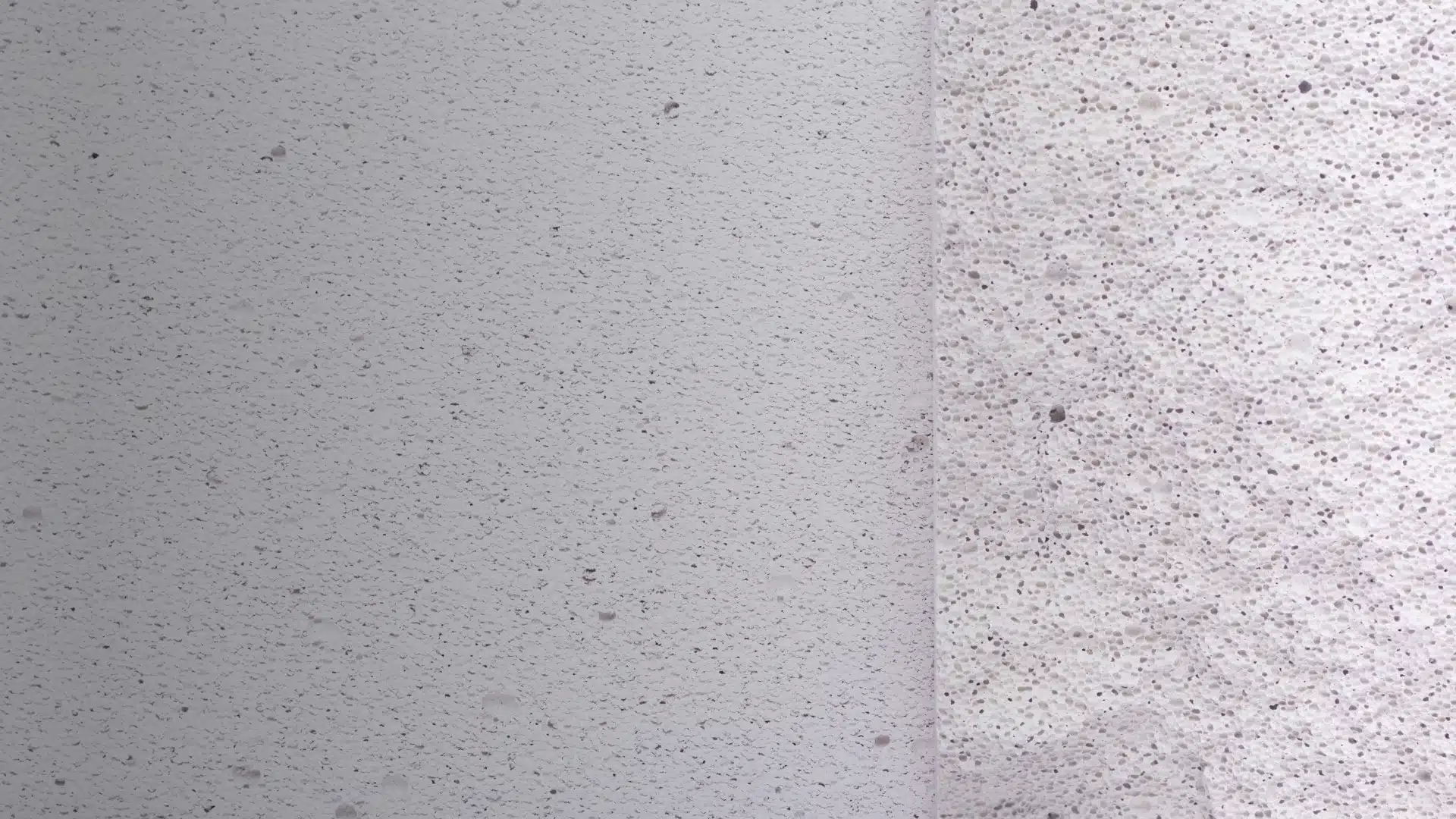
Unlike conventional reinforced concrete, RAAC has a porous structure that provides less protection to the embedded steel reinforcement. As the material ages, particularly where water ingress has occurred, the reinforcement can corrode and the structural performance of the panels can deteriorate. Issues such as poor original installation, manufacturing defects, or alterations made after construction can further increase the risk of failure.
Although RAAC does not have a fixed lifespan, many panels are now reaching or exceeding their original design life. As a result, understanding whether RAAC is present and assessing its condition has become an important part of managing building safety and planning future maintenance or replacement works.
The concerns about RAAC are solely linked to its durability and structural performance. At present there is no evidence to suggest it poses any other health risk. Before any construction remediation of RAAC work takes
place, there are legal procedures to follow to manage any asbestos risk.
Remediation of RAAC will take into account asbestos identification on the specific site in the location of the work, and careful management if it is present.
In most cases, no. RAAC concrete is often concealed within the structure of a building, making it difficult to identify without specialist knowledge and, in some cases, intrusive investigation. Its condition can be equally challenging to assess, particularly where defects or deterioration are not visible.
If you suspect your building may be affected, Barker’s chartered surveyors and structural engineers can help establish whether it is present and assess its condition via a RAAC inspection.
Given the age of many buildings where RAAC is found, other materials such as asbestos may also be present, making professional assessment particularly important. Our team can provide a safe and structured approach to identifying RAAC and developing an appropriate plan of action where it is confirmed.
Even if RAAC is not serving a structural function, its presence should not be ignored. The condition of the material still needs to be assessed, as deterioration, damage or water ingress can create risks over time.
Barker can carry out the necessary inspections and risk assessments to determine the condition of the RAAC, advise on any mitigation measures required, and develop a plan for ongoing management, remediation, or removal where appropriate.
If it is determined that RAAC is present, it will be necessary to consider whose responsibility it is to repair and
maintain the property. There will, of course, be additional statutory duties and contractual obligations to consider.
Where the property is owned freehold and the property is not occupied by any third parties, it is likely that the
responsibility for repair and maintenance will be with the owner and occupier of the building.
Where a property is tenanted, it will be necessary to look at the repairing obligations under the lease together
with whose responsibility it would be under any health and safety legislation.
Discovering RAAC is often only the start of the process. Once its presence has been confirmed, building owners need to understand the level of risk, the options available, and what action is required to make the building safe.
Our team works from identification through to resolution. We can investigate buildings where RAAC concrete is suspected, confirm its presence and condition through detailed surveys, and provide advice on the most appropriate course of action.
Where remediation or replacement is required we will support in developing a strategy, taking into consideration available funding opportunities, and deliver the works needed to rectify the issue.
If you suspect your building may contain RAAC, early investigation can help you understand the extent of the issue and plan the most appropriate response.
Our dedicated teams can identify the presence of RAAC, assess its condition, explore remediation or replacement options, and support the delivery of any required works.