
Created: 13th July, 2026

Robert joined Barker in 2002 and is a Partner based in our Braintree office. A Fellow of the Royal Institution of Chartered Surveyors, he has over 20 years’ experience of all core building surveying services and provides strategic estates advice to key accounts in the education, commercial, ecclesiastical and public sectors.
An education specialist, he provides the following services: estates and energy strategy, asset management planning, project management and capital funding applications.
Robert works closely with clients to plan and implement energy efficiency and sustainability strategies to save money, reduce carbon emissions and meet ESG objectives.
As a RICS Certified Historic Buildings Professional he provides conservation consultancy for clients with listed and historic buildings.
Robert is an experienced APC Assessor and Chairman and is also an external examiner for Anglia Ruskin University
As a Partner Robert leads the Business Development and Marketing function at Barker, builds relationships with key sector bodies and helps steer the strategic growth of the company.
Email: rgould@barker-associates.co.uk
Tel: 01279 648057
Practical, affordable and actionable ways to ensure classrooms are cool and comfortable during the warmer months
As temperatures continue to rise during the summer term, many schools are finding that older buildings struggle to cope with hot weather. While modern schools may benefit from sophisticated ventilation and cooling strategies, many older school buildings rely on traditional construction, large, glazed areas and limited insulation.
The good news is that keeping classrooms cooler doesn’t always require expensive air conditioning systems. In many cases, a combination of simple operational changes and targeted building improvements can make a noticeable difference.
One of the most common mistakes during a heatwave is opening windows throughout the hottest part of the day. While this feels intuitive, it can make classrooms warmer if the outside temperature is higher than the inside temperature.
Instead:
This “cooling purge” approach is widely recommended for naturally ventilated buildings and can significantly reduce afternoon classroom temperatures.
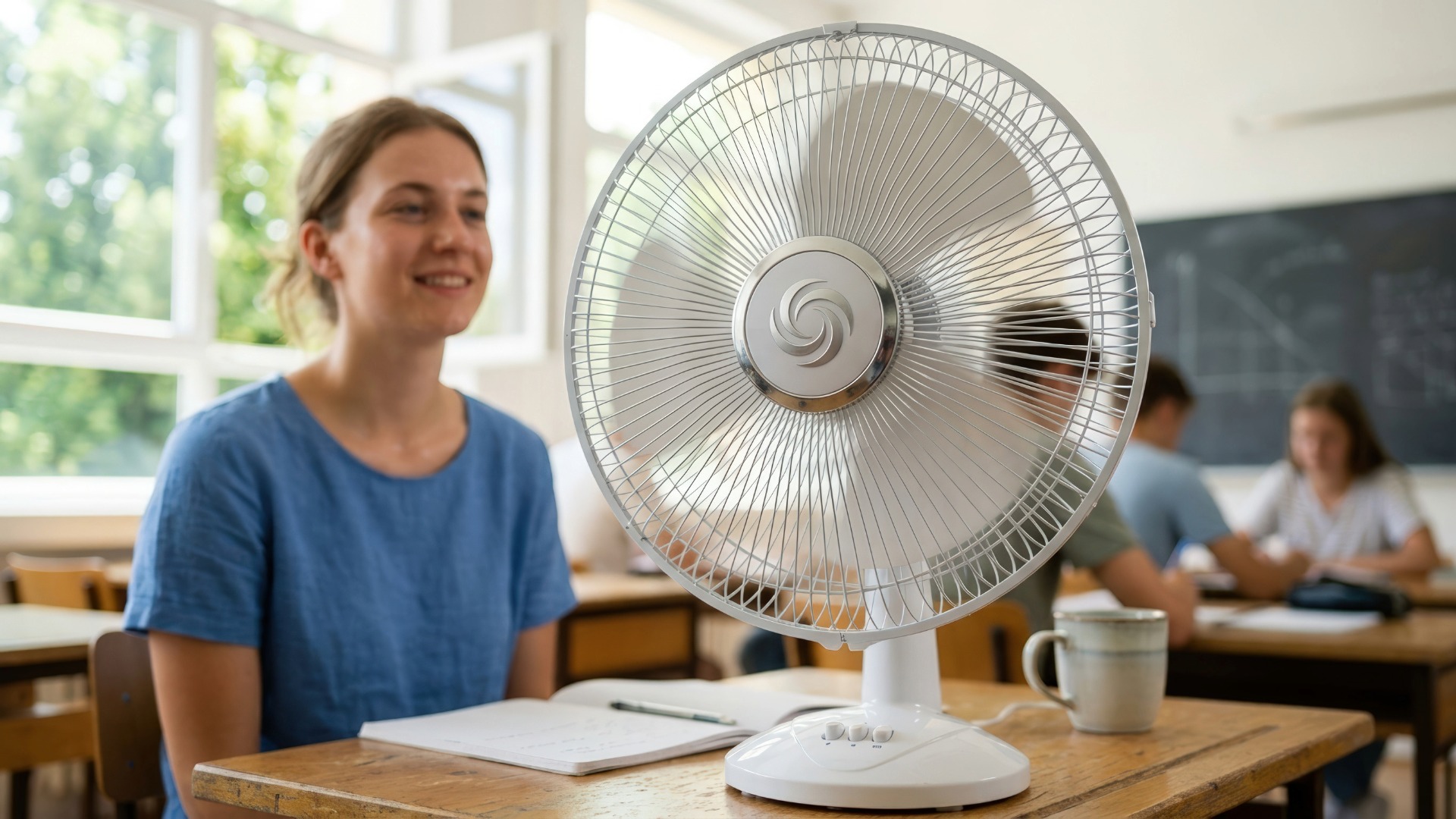
Fans don’t lower air temperature, but they do improve occupant comfort by increasing air movement.
To get the best results:
In older buildings with varying sun exposure, classrooms on the shaded side of the school can sometimes act as a source of cooler air that fans can help distribute.
Before investing in expensive mechanical cooling systems, schools should consider passive shading solutions.
The most effective shading stops sunlight reaching the glass in the first place. Once solar radiation passes through a window, it becomes much harder to remove the resulting heat.
Options include:
External shading systems can block significant amounts of solar gain before it enters the classroom.
Fixed external shading fins or louvres are particularly effective on south-facing elevations and can provide year-round benefits.
Strategically planted trees can reduce solar gain, improve outdoor comfort and enhance biodiversity. While not an immediate solution, they provide long-term value with minimal operating costs. Deciduous trees are usually recommended as they provide much-needed shade during the summer but allow beneficial daylight in the winter.
Simple canopies above windows can dramatically reduce direct sunlight entering classrooms during the hottest months.
Passive shading solutions often provide better long-term value than air conditioning because they reduce overheating without adding energy consumption or maintenance costs.
For schools working with limited budgets, solar control window film can be a cost-effective intervention.
Benefits include:
While it won’t eliminate overheating on its own, solar film can be particularly valuable in classrooms with large areas of glazing or west-facing windows that experience intense afternoon sun.
If a school is considering capital investment projects, improving the fabric of the building can provide year-round benefits.
Key areas include:
Many older school buildings gain significant amounts of heat through poorly insulated roofs. Upgrading insulation helps keep heat out during summer and retain warmth during winter.
Older single-glazed or poorly performing windows can contribute to overheating. Modern glazing systems with solar-control coatings can improve thermal performance significantly.
Although often associated with winter performance, controlling unwanted air leakage can help schools better manage ventilation strategies throughout the year.
These projects require greater investment but deliver long-term improvements in comfort, energy efficiency and carbon reduction.
Not all heat comes from outside. Schools can also reduce heat generated within the building by:
These measures may seem small individually, but together they can help significantly reduce classroom temperatures.
As heatwaves become more common, schools should consider developing a simple heat management plan.
This might include:
A consistent approach helps staff respond quickly when high temperatures are forecast.
There are more sophisticated solutions available, including advanced ventilation systems, night-cooling strategies and major refurbishment projects. However, these are often difficult to retrofit into older schools and are unlikely to be practical responses to short periods of extreme weather.
For most education settings, the greatest gains come from getting the basics right:
Staying hydrated and seeking shade remain essential health measures during hot weather, but these approaches manage the symptoms of overheating rather than addressing the building’s performance itself.
For school leaders looking to improve comfort in the long term, investing in passive cooling measures and building improvements will usually deliver the most sustainable and cost-effective results.
Where schools are undertaking refurbishment or extension works, consideration should be given to the latest Building Bulletin 101 guidance on ventilation, indoor air quality and overheating.
Schools operating air conditioning systems must also be familiar with TM44, the statutory inspection requirement under the Energy Performance of Buildings Regulations (England & Wales).